
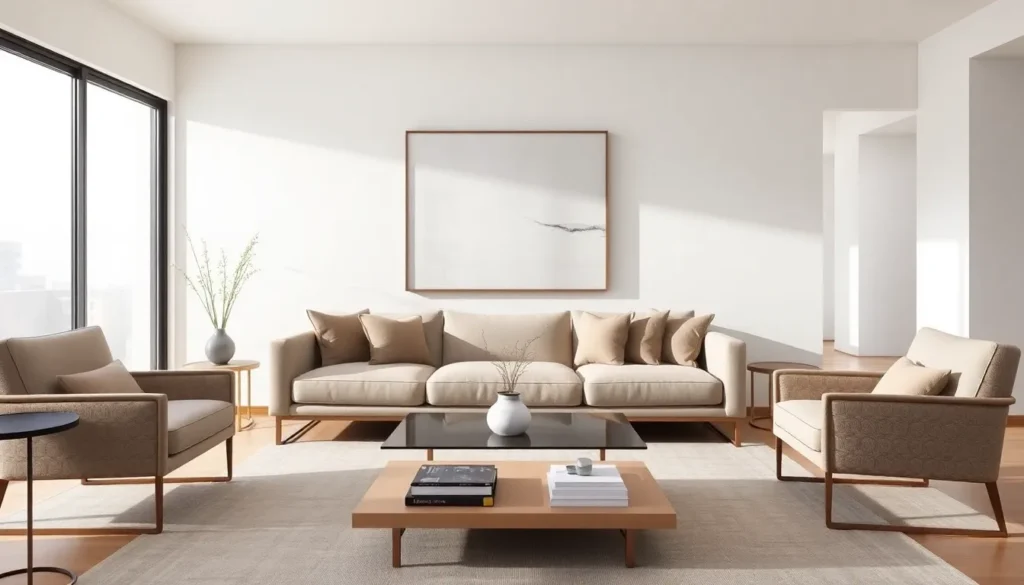
In a world cluttered with chaos, where even your coffee mug seems to have too much personality, adopting a minimalist living room design might just be the breath of fresh air you need. Imagine a space where every item serves a purpose and aesthetics feel like a refined waltz between functionality and style. While it may sound daunting, minimalist living isn’t about having a white, sterile box for a home. No, it’s about making smart choices that resonate with serenity and sophistication. Grab your favorite beverage, and let’s explore how to transform your living area into a zen-like retreat that even Marie Kondo would envy.
Understanding Minimalism in Interior Design

Minimalism is more than just an aesthetic: it’s a lifestyle choice that many have adopted in recent times. This design philosophy prioritizes simplicity by stripping away the non-essential elements in a space, focusing instead on quality over quantity. It’s the art of creating a harmonious environment that feels both peaceful and functional. While the roots of minimalism can be traced back to modernist movements of the early 20th century, today’s approach embodies both simplicity and sophistication.
The charm of a minimalist living room lies in its ability to foster a sense of calm. By eliminating excess, one can create a space that visually pleases without overwhelming the senses. It encourages you to curate your surroundings, surrounding yourself only with items that evoke joy or have a clear purpose.
Understanding this philosophy is crucial to achieving a minimalist living room design that reflects both personal style and practicality.
The Principles of Minimalist Living Room Design
Creating a minimalist living room doesn’t happen by accident: there are fundamental principles to consider. Each aspect plays a pivotal role in achieving the tranquil ambiance one desires. Here are key elements:
Essential Elements of a Minimalist Living Room
First and foremost, start with essential pieces. A comfortable sofa, a coffee table, and perhaps a few accent chairs should suffice. Each item should serve a specific purpose while also offering a visual appeal. Think functionality over frills: every piece should have a story or utility that justifies its presence.
Choosing a Color Palette
When selecting a color palette, less is undoubtedly more. Neutral tones such as whites, grays, and beiges provide a soothing backdrop. Accent colors can emerge through throw pillows, art, or a singular piece of decor. The goal is to create an inviting but understated feel: think splashes of color rather than full saturation.
Furniture Selection and Layout
Furniture in a minimalist space should be versatile and streamlined. Opt for pieces that can function in different ways, like an ottoman that serves as both storage and seating. The layout should promote flow and accessibility, avoiding overcrowding. Arrange furniture to encourage conversation while ensuring ample walking space.
Lighting Considerations
Finally, lighting can make or break a minimalist design. Natural light is a friend here, so embrace large, open windows if possible. Supplement with sleek fixtures, think geometric shapes or pendant lights that complement the serene vibe. Refrain from overwhelming your space with multiple sources that compete for attention.
Incorporating Art and Accessories
While minimalism values simplicity, it doesn’t mean you have to live in a barren environment. Thoughtfully integrating art and accessories can elevate your space. Here’s how:
Choosing art pieces should focus on quality rather than quantity. Opt for one or two statement artworks that resonate with you instead of a gallery wall. A large canvas can act as a focal point, drawing attention without overwhelming the space.
Accessories should also be minimal yet meaningful. Think in terms of a few carefully selected items, such as a singular vase or a small stack of elegant books. Place these strategically, like on a coffee table or a shelf, to create interest without clutter. Remember, negative space is just as essential: it helps break up visual monotony.
Creating a Functional Space
Functionality should reign supreme in a minimalist living room. Think of how the space will be utilized on a daily basis, and plan accordingly. Layout flexibility is key, transforming your living room for varied purposes, whether for leisurely lounging, hosting friends, or even working from home.
To promote function, consider multi-purpose furniture. A coffee table with storage space beneath can help manage clutter, and shelves that double as decor can play dual roles. Also, zone your spaces, create small areas for reading, playing games, or relaxing. It’s about maximizing usage without compromising the minimalist mantra.
Maintaining a Minimalist Living Room
Maintaining a minimalist living room requires ongoing effort: it’s not a one-off task. Periodically take stock of your belongings and let go of pieces that no longer serve a purpose or bring joy. The famed rule of ‘one in, one out’ can help keep clutter at bay as well.
Regularly assess the flow of your space: rearranging furniture can breathe new life into your design without requiring any new purchases. Dust and clean surfaces with frequency, minimalism shines brightest in clean settings.
Also, remember not to force functionality: it should come naturally with how you live and use your space. Creating and maintaining a minimalist environment is an ongoing journey, not a destination.