
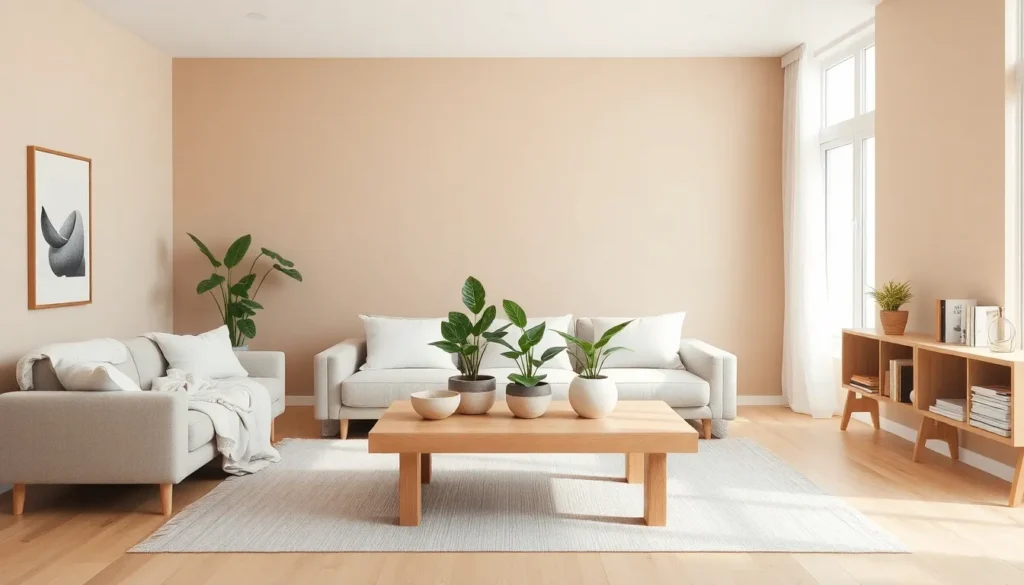
Imagine a living room that feels like a breath of fresh air, where every element contributes to a serene atmosphere. That’s the magic of a Japandi living room. With its beautiful blend of Japanese minimalism and Scandinavian coziness, it’s a style that promises both tranquility and functionality. If you’re ready to transform your space into a restful retreat, let’s jump into the principles and practices that will make your Japandi dreams come true, no zen gardens or meditation mats required.
Understanding Japandi Design Principles

The Philosophy Behind Minimalism
Minimalism isn’t just about empty spaces: it’s a lifestyle choice reflecting clarity and purpose. At its core, minimalism invites individuals to evaluate their surroundings, keeping only the items that truly enhance their lives. It encourages a mindset shift, promoting a more fulfilling existence with fewer distractions.
Key Elements of Japandi Style
Japandi style marries simplicity with warmth, incorporating natural materials, neutral tones, and clean lines. Imagine wood grains that whisper stories with every scratch, and fabric textures that invite cozy gatherings. This aesthetic leans heavily on function without sacrificing beauty, creating spaces that are both practical and pleasing to the eye.
Combining Japanese and Scandinavian Aesthetics
The beauty of Japandi lies in its harmonious fusion of two distinct cultures. Japanese design focuses on simplicity, craftsmanship, and minimalism, while Scandinavian design emphasizes functionality and a love for nature. Together, they create a living room that feels open yet inviting, like a welcoming hug from nature itself.
Creating a Japandi Living Room
Color Palette and Materials
Start with a muted color palette inspired by earth tones: soft grays, rich browns, and gentle greens. These colors evoke tranquility and connect homeowners to nature. Consider materials such as light oak or bamboo for furniture, complemented by cozy linen or wool throws. This combination not only enhances the aesthetic but also invites comfort into everyday life.
Furniture Selection and Arrangement
Choose furniture that speaks the language of simplicity and elegance. Opt for low-profile sofas, streamlined coffee tables, and multi-functional pieces to maximize utility. Arrange furniture to help conversation and flow: think open pathways that lead to relaxation and not obstacles. The goal is to create a space that feels effortlessly lived in, encouraging both social gatherings and personal solitude.
Incorporating Nature and Greenery
Plants are more than mere decor: they’re vital for a Japandi living room. Incorporate greenery through potted plants or subtle landscaping features that breathe life into your space. Consider easy-care options like snake plants or peace lilies, which enhance air quality and aesthetics. Nature’s color pops beautifully against a serene backdrop, adding vibrancy while maintaining that peaceful minimalism.
Decorative Accessories and Textiles
Choosing Functional Decor
Accessories in a Japandi living room should serve a purpose, focusing on functionality while contributing to the overall aesthetic. Think about items like decorative trays, open shelving for select books, or ceramic bowls that can both beautify and hold everyday items. Each piece should tell a story or serve a function, weaving together a narrative of simplicity and grace.
Balancing Clutter and Open Space
Creating a sense of open space is crucial in maintaining a Japandi feel. Avoid overcrowding shelves and surfaces: instead, opt for curated displays. Leave room for negative space, which helps the eye rest and the mind unwind. This balance between carefully chosen decor and open areas promotes a calm environment, essential for that relaxing retreat vibe.
Tips for Maintaining a Japandi Living Room
Essential Maintenance Practices
Keeping the minimalist aesthetic intact requires regular upkeep. Dust surfaces often, and ensure that every item retains its intended purpose. Establish a routine that includes decluttering: periodically assess items that bring joy versus those that are just taking up space. This practice not only enhances the room’s look but also nurtures a peaceful mindset.
Seasonal Updates and Adjustments
A little seasonal flair can refresh the space without compromising its core design. Consider swapping out textiles, like throws or cushions, for seasonal colors or patterns that reflect the time of year. You might introduce lightweight curtains for summer or richer fabrics for winter. These subtle changes keep the room alive and engaging while maintaining its simplicity.